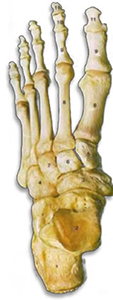
If you have flat feet (pes planus) it does not mean you will have problems or pain. Flat feet are a common condition. Flat feet are defined as an abnormal lowering of the medial longitudinal arch. There is often a hereditary component to the development of flat feet. Flat feet are more common in certain ethnic groups. Flat feet usually occurs equally in both feet and become apparent at an early age. Flat feet can initially be asymptomatic, but can become progressively symptomatic with age. Some flat feet never become bothersome.
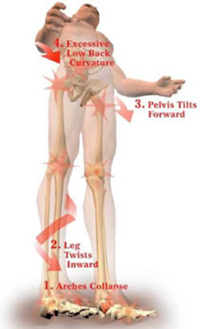
The medial arch is unstable in flexible flatfoot. The foot can bend as the heel lifts of the ground. This creates stress on the surrounding soft-tissues and joints creating tired, sore arches. The instability of the foot can create abnormal stress that flows up the leg which results in pain in the legs, knees, hips and lower back. Patients with flat feet often present to the chiropodist/podiatrist with problems that are indirectly caused by their foot structure.
Symptoms
Pain and stiffness of the medial arch or anywhere along the mid-portion of the foot
Associated discomfort within and near the ankle joint
The knees, hips, and lower back may be the primary source of discomfort
Feet may often feel tired and achy
Painful shin splints may develop with activity
Gait may be awkward.
Causes
Genetic predisposition
Faulty foot mechanics, e.g. excessive pronation
Abnormal bony architecture
Laxity of ligaments
Neuro-muscular disease
Trauma to the leg muscles or major tendons
Inflammatory diseases of the joints e.g. Rheumatoid arthritis
Surgical procedures on the leg and ankle
Limb length inequality
Tight Achilles tendon
 Treatment for Flatfeet
Foot orthotic devices can stabilize some of the causes of flat feet, optimize muscle function and reduce the occurrence of painful symptoms. Generally, a custom-made semi-rigid functional posted orthotic is effective for flat feet. These devices are prescribed based on a thorough biomechanical examination by a qualified chiropodist/podiatrist. Over-the-counter arch supports may be helpful for mild cases, but often prove ineffective to relieve symptoms associated with flatfoot.
Wear shoes with a good fit in the arch
Keep active and fit to strengthen leg and foot musculature
Control body weight to decrease load on the feet
Avoid prolonged periods weight bearing with bare feet


Taping to support strained ligaments and joints
Physical therapy modalities such as ultrasound
Referral for surgical correction a severe symptomatic flatfoot
Complications of flatfoot over time
Severe heel pain from plantar fasciitis and Achilles tendonitis
Chronic strain and pain in the arch and lateral side of the mid-foot
Metatarsal stress fracture
Early degenerative joint disease (osteoarthritis) of lower extremity joints
Flatfeet are more prone to conditions such as bunions, hammer-toes, and Morton's neuroma
Painful corns and calluses
Structural changes may create areas of abnormal pressure resulting in chronic ulcers of the foot
Chronic foot pain may lead to inactivity and diminished well-being
Adult Acquired Flatfoot

 Some people have always had flat feet from a young age. Unfortunately as people reach their fifties they will suddenly have one foot with a flatter arch than the other foot. This situation is termed adult acquired flatfoot. Adult acquired flatfoot is a painful condition occurring in one foot. The common patient profile is a female over the age of 50 with pre-existing flatfeet, high blood pressure, high cholesterol, diabetes and obesity. All of these underlying problems will lead to a weakening of the support structures of the arch. If you have adult acquired flat foot you will not be able to lift your heel off the ground while standing on one leg.
Adult acquired flatfoot may develop due to trauma or degeneration of major tendons ankle & foot. Weakness or paralysis of leg muscles can also create a flatfoot deformity.

 Adult acquired flat foot can be treated with:
1. physical therapies,
2. motion control running shoes or hiking boots,
3. custom foot orthoses, and
4. ankle foot orthoses.
Call for Appointment: 91 9029022848
Resource:
Flat feet, fallen arches, painful arches treated by chiropodist foot doctor in Whitby, Peterborough


 If you are standing, the instep looks hollow and most of the weight is on the back and balls of the foot (metatarsals head).
 Electromyography
 Debridement of corns and calluses